
/user.svg)
/cart.svg)
How to board for a freestyle scooter
Deck Division:
- by riding style: (skatepark, street)
- by headset type: (integrated, non-integrated)
- by deck neck (headtube): (one-piece, two-piece)
- wheel sizes
How to Extend the Life of Decks:
- avoid grinding on curbs or concrete blocks (you can wear the deck down to the reinforcements or welds, the deck may crack sooner, see. photo)
- avoid riding in puddles
- wax the bottom of the board properly
- avoid dropping from great heights
- jump into landings, not onto platforms
- land tricks straight, not at an angle (this affects the wheels and the board)
Division by riding style:
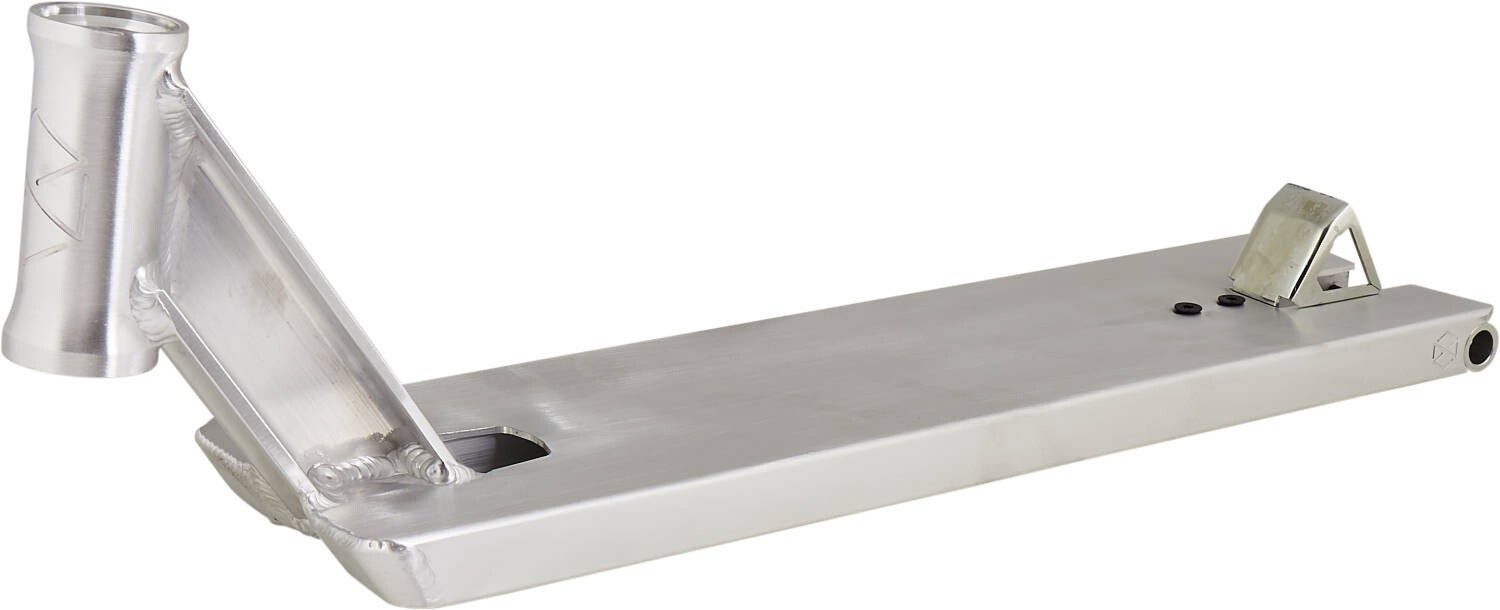
- are generally shorter and lighter, narrower, more maneuverable
- may crack earlier when used on the street
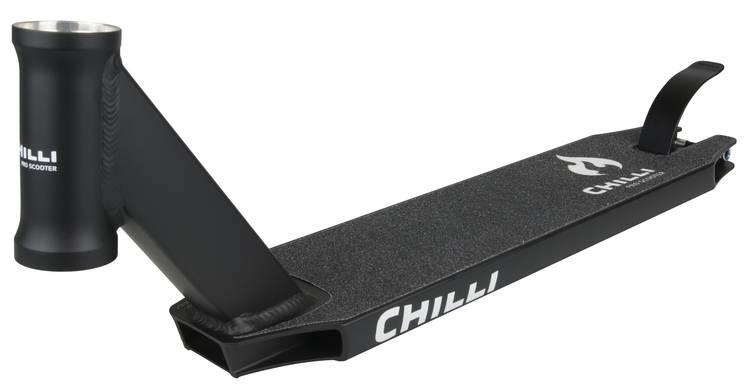
- they are generally longer and more robust, wider, heavier
- they are much stronger, but tricks are harder to perform on them
- they usually have a neck made from one piece
Division by Headset Composition:
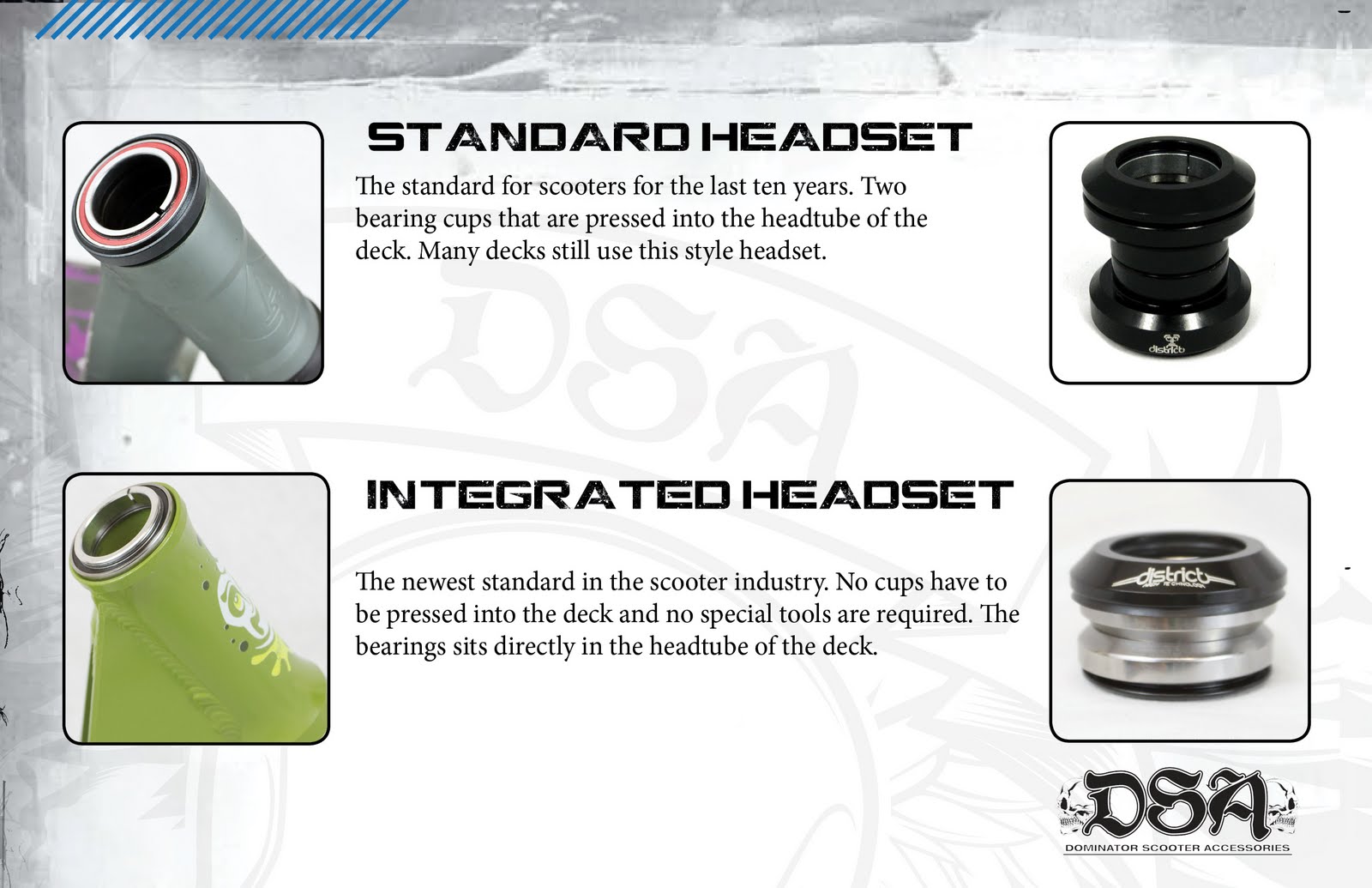
For Integrated Headsets:
- The head tube is already prepared for an integrated headset (so-called. The headset cups are machined into the board), they are prepared for industrial headset bearings
Advantages:
- easy assembly, bearings fit precisely into the cup, extending the lifespan of the headset and cup
For non-integrated headsets:
- are no longer used, found only on some cheap scooters under 3000 CZK
- the headset cups are not machined, a simple neck tube is used into which the headset cups are pressed
Advantages:
- we can use any headsets with cups, (e.g.: threaded headset for threaded forks)
Disadvantages:
- the deck wears out faster,
- the headset cups must be pressed in precisely, otherwise it won't spin easily

Division of decks by neck: (headtube)
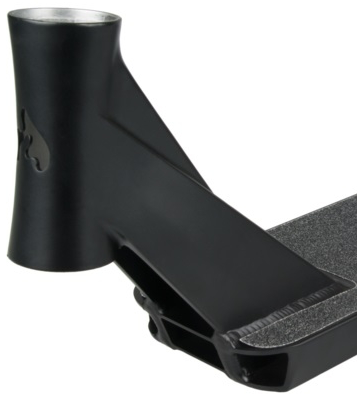
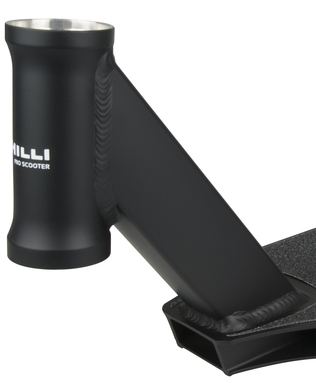
One-piece neck:
- - much stronger, neck made from one piece, is much more durable, but more expensive.
Advantage: the neck of the deskay is firmer. (does not scratch the throat)
Disadvantages: the decks are more expensive
Two-piece neck:
- - composed of 2 parts that are welded together
Advantage: the plates are cheaper
Disadvantage: due to the weld, the neck of the board may crack
Division by wheel size:
- Boards are typically made for 110, 100 mm wheels, but some boards are already for 120, 125 mm wheels
- We recommend using wheels that are designed for individual boards
- If we want to use larger wheels, for some boards it is enough to replace the brake, which is for 125 mm wheels, or we need to modify the board
Concave and board angle:
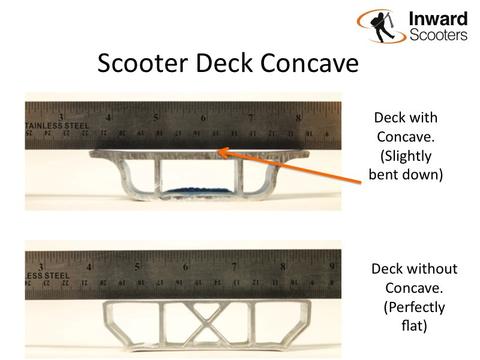
Concave:
- deck concave (curvature of the stepping surface), which helps keep feet on the deck better and makes tricks easier
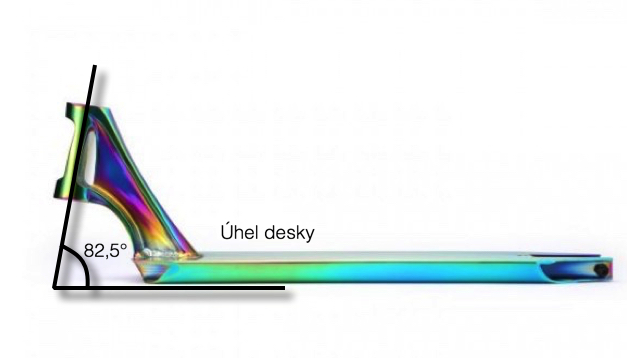
 Deck angle:
 - indicates the angle at which we will hold the handlebars to the stepping surface of the deck
- used from 82 - 84°
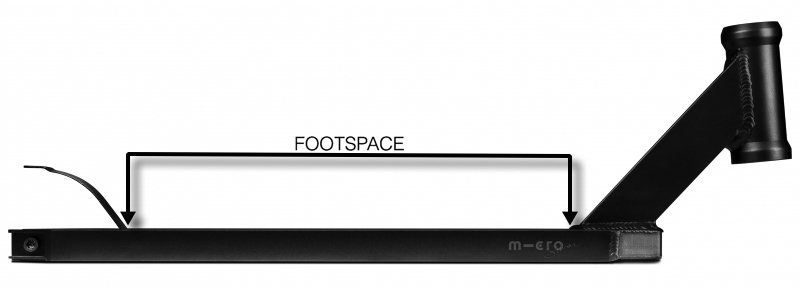
Footspace:
- so-called legroom length
- measured from the neck end (weld on the plate) to the start of the brake
Board Materials:
Aluminum 6061 T6 is mostly used for production (T6 indicates the heat treatment of aluminum, the higher the number, the more durable the product)
6061:
- 6000 series aluminum, aluminum alloy with silicon and magnesium
- this material welds well, it is quite strong
- usually heat-treated to T6
Advantages:
- better availability of materials in production
- easier to weld
Disadvantages:
- not as strong as 7000 series aluminum
7075:
- 7000 series aluminum, aluminum and zinc alloy
Advantages:
- stronger material, more durable than 6000 series aluminum
Disadvantages:
- higher purchase price of the board
- more difficult to weld
Sometimes these two materials are combined. E.g. The neck of the board is made from 7075 aluminum and the board itself is made from 6061.
photos by: inward-scooters.com, dissidence, DSA