
/user.svg)
/cart.svg)
How to make a freestyle scooter fork
Choosing a Fork for a Freestyle Scooter
Your scooter desperately needs a new fork, you're looking at websites and can't make sense of the multitude of types? Then this article is just for you!
We have the distribution according to:
- Material
- Whether they are threaded or non-threaded
- How many parts does it consist of
- Compatibility with wheel diameters
- According to compression systems
By material:
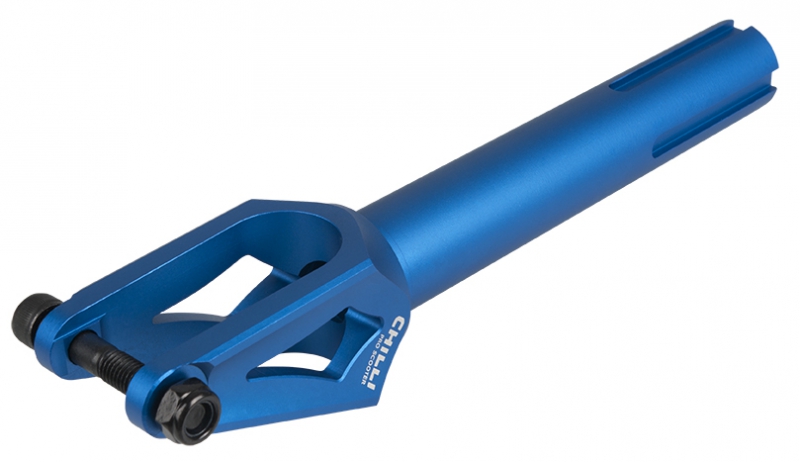
Aluminum:
These forks are mostly made from a single piece, usually without threads on the outside of the fork. They can be made from aluminum 6071 or 7055.
Advantages: lightweight fork, easy to process
Disadvantages: more expensive
Steel:
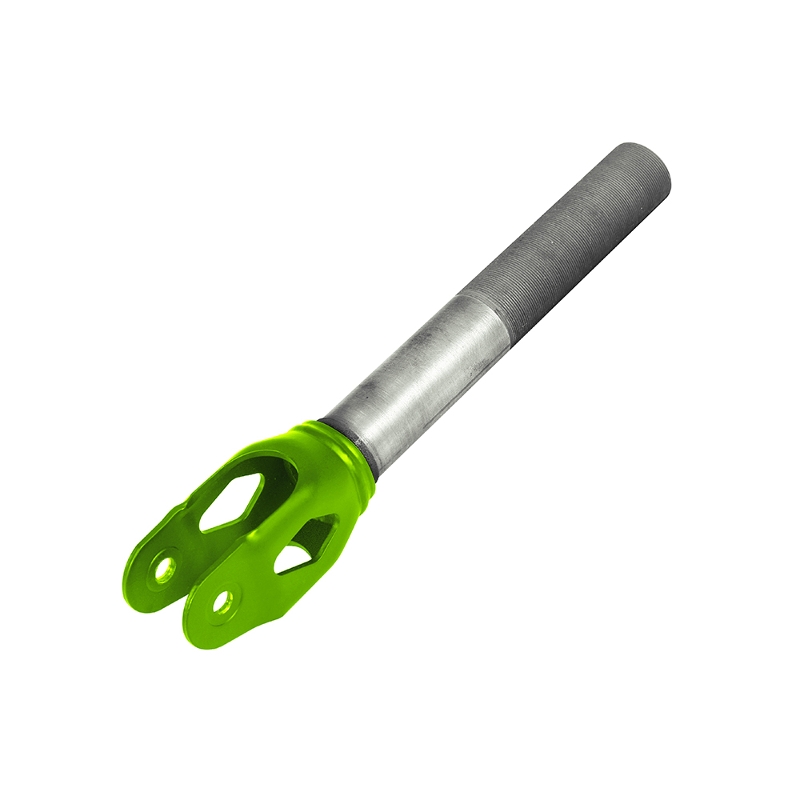
They are mostly manufactured threaded (they can crack due to the thread), made from two pieces that are welded together
Advantages: cheaper
Disadvantages: they are heavier, threaded forks can crack, they are made of two parts
By thread:
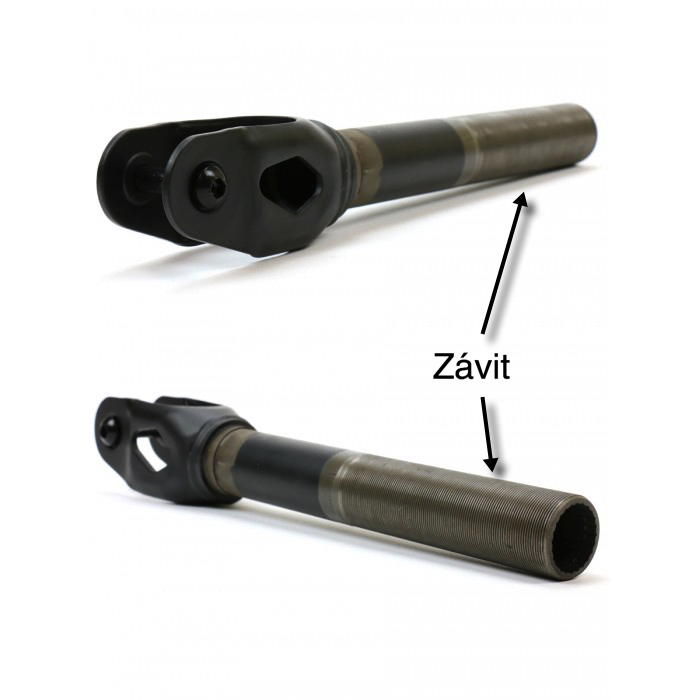
Threaded:
The top part of the tube has a thread, mainly used in cheaper scooters under 3000 CZK. Due to the thread, they have a weakened side of the tube, making them less sturdy (the threads can lead to cracking).
How to extend the lifespan of a threaded fork:
- always have the headset properly tightened
- always ensure the wheel is sufficiently tightened (to prevent damage to the axle)
- avoid riding in rain, puddles, and dust (to prevent rusting of the headset and fork)
Without thread:
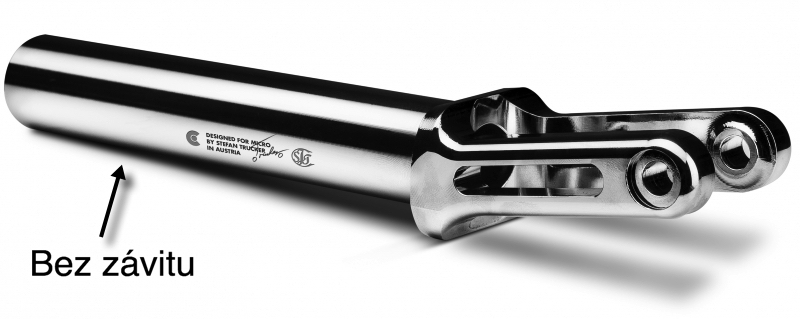
They do not have threads, which makes them more durable, but some compression system must be used (without a compression system, there may be earlier cracking and damage to both the board and the headset). The headset must always be tightened)
How to extend the lifespan of a threadless fork:
- always ensure the compression system is properly tightened
- always ensure the wheel is sufficiently tightened (to prevent damage to the axle)
- use a compression system that is designed specifically for the fork
By method of production:
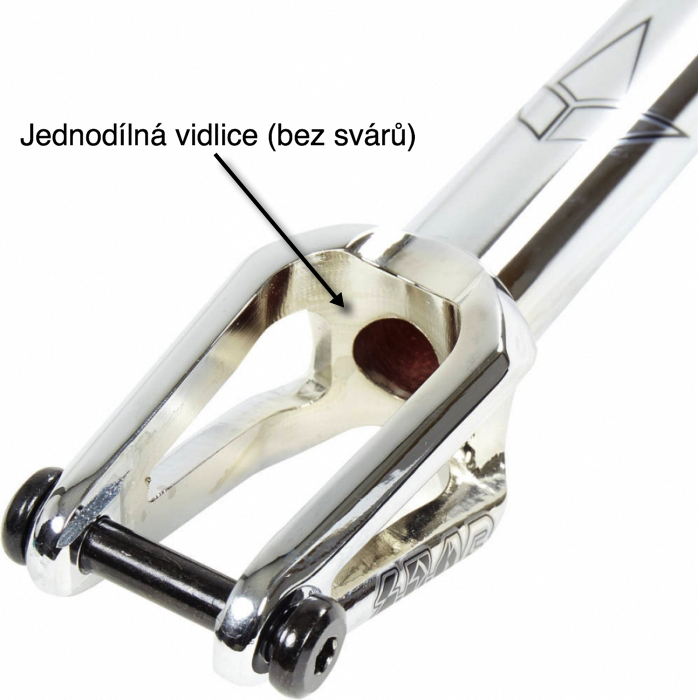
One-piece:
They are made from a single piece of aluminum, which is processed on a CNC machine
- some are cold-forged, cast into a mold = increases strength
Advantages:
- are stronger than two-piece ones
Disadvantages:
- the fork is more expensive
Two-piece:
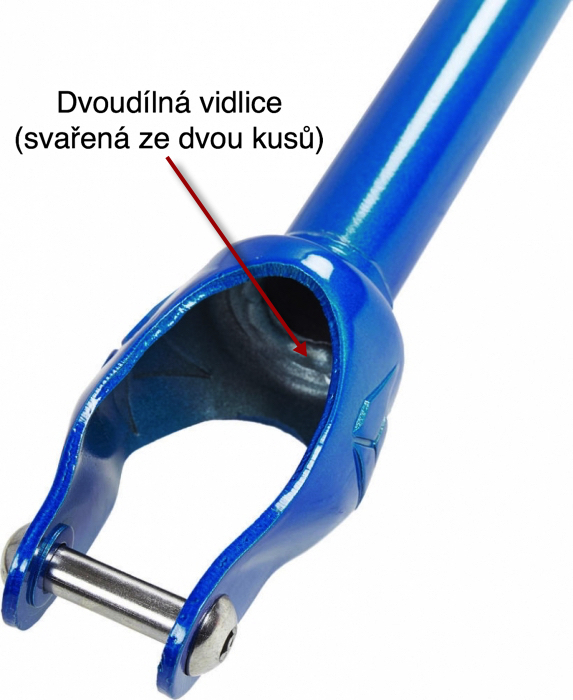
They are made of two parts, a tube that is welded to the fork legs, mostly made of steel
Advantages:
- more affordable
Disadvantages:
- a weld may crack
- they are not so durable
According to the diameter of the wheels:
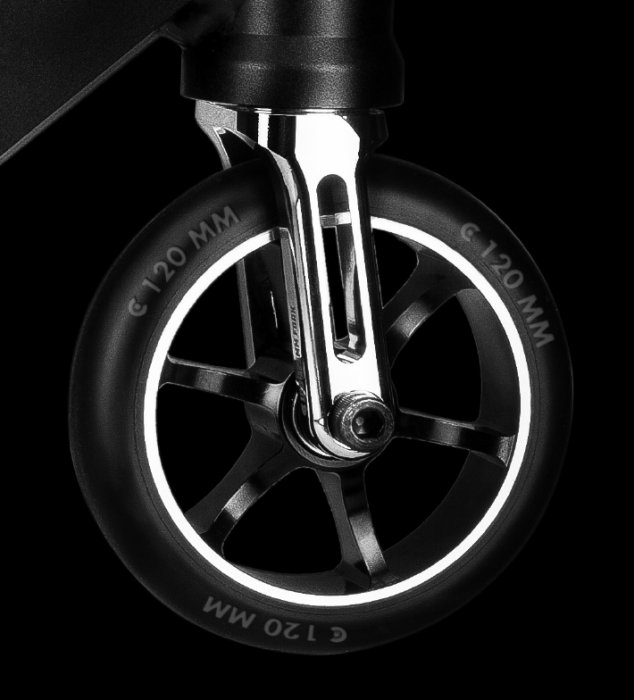
It depends on how high the wheel is, and Radix wheels also depend on the width. Standard forks are typically made for 100mm–110mm, but some forks are also for 125mm wheels.
Compression systems:
- Aluminum forks are made for a specific type of compression system (HIC, IHIC, SPIDER HIC, ICS....), it is necessary to match the type of fork with the type of compression system.
- We must adhere to the compression system for which the fork is designed, you will learn more about comp. system HERE.

What is Ofsed:
Ofsed: determines whether the shaft is centered or forward, whether it is off-axis or vertically aligned with the tube
Offset Forks:
- the fork axle is off-center (the wheel is protruding)
- the ride is faster, smoother
Zero offset forks:
- in the axis in the middle of the vertical tube.
- the ride is more playful, excellent for street riders, nose manuals, but slower ride

According to the lower crown of the headset:
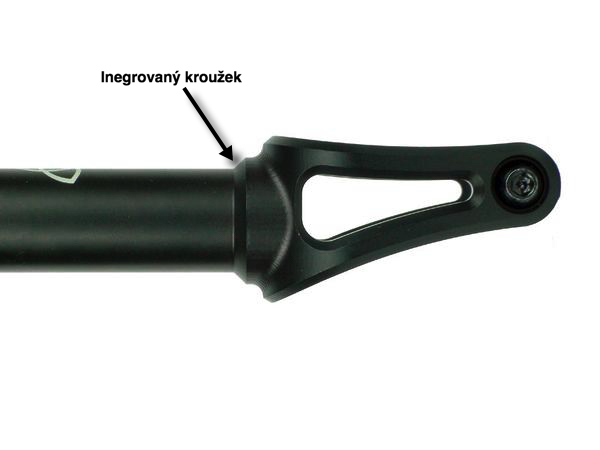
Fork with integrated crown (lower ring of the headset)
The bottom ring is integrated (it is machined from production)
Advantages:
- easier bearing installation
- spinning is smoother
- thanks to the integrated ring, the lifespan of the fork is extended
Disadvantages:
- is more expensive, cannot be replaced when the ring wears out, is precisely machined for the headset
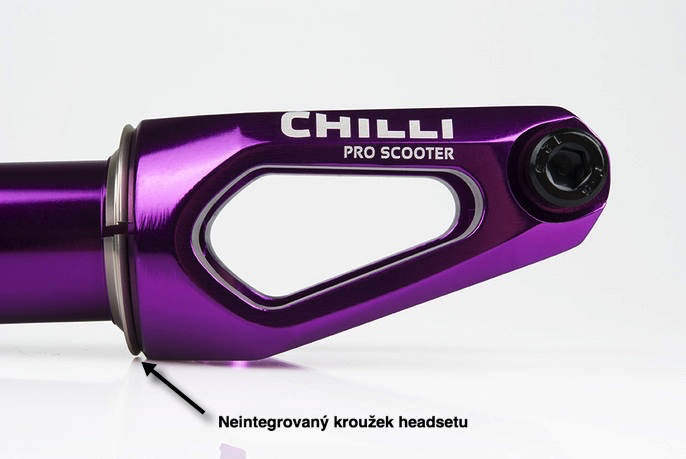
Fork with Non-Integrated Crown (Bottom Headset Bearing)
We are installing the lower headset ring on the fork
Advantages:
- forks are cheaper
- if the ring wears out, it can be replaced
Disadvantages:
- the ring must be precisely pressed (fitted) onto the fork
- the ring is harder to remove
photos by: inward-scooters.com