
/user.svg)
/cart.svg)
How to Assemble a New Freestyle Scooter and What to Check Before the First Ride
20. May
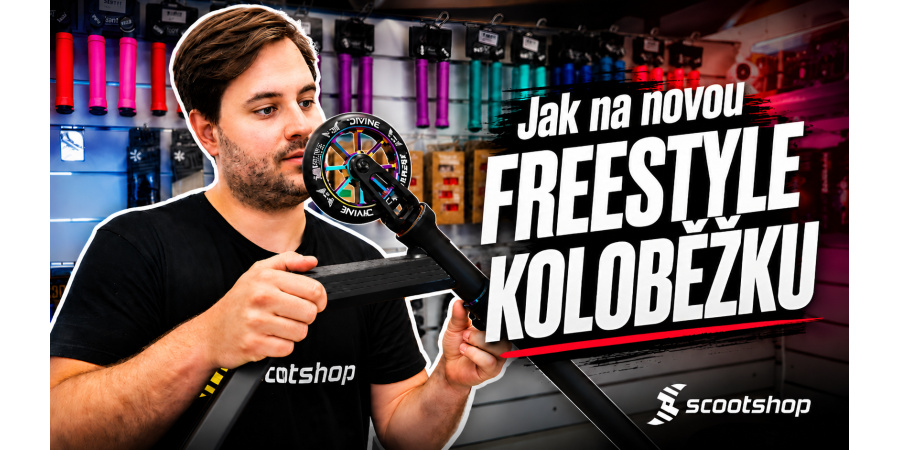
Did you buy a new freestyle scooter? Great. Before you take it to the skatepark or the street, you need to assemble it correctly, tighten it, and check it.
With a new scooter, it may happen that some parts "settle" during the first rides. If you prepare it correctly right from the start, you will avoid knocking, play, loose screws, or unnecessarily rapid wear.
In this article, we will show you what to do before your first ride and what to watch out for.
Video Guide: Complete Freestyle Scooter from the Factory
If you have purchased a complete freestyle scooter, a ready-made factory setup, watch our video guide:
In the video, you will see how to unpack, assemble, tighten, and properly handle the scooter to ensure it lasts as long as possible.
Video Tutorial: Custom Freestyle Scooter
If you have bought a custom scooter, meaning a scooter assembled from individual parts, check out the tutorial for custom setups:
Custom scooters can have various combinations of parts, compression systems, clamps, and handlebars, so it's important to check especially for proper tightening and compatibility of the individual components.
What to Check Right After Unpacking the Scooter
After unpacking the scooter, take a few minutes for a basic inspection.
It's nothing complicated, but it can save you a lot of trouble.Check mainly:
- if the handlebars, deck, or wheels are not damaged
- if all wheels are properly mounted and tightened
- if the handlebars rotate freely
- if the clamp is not loose
- if the brake does not rub against the wheel
- if the scooter does not rattle upon landing
If something rattles, loosens, or does not rotate as it should, it's better not to ride the scooter immediately and resolve the issue first.
How to Properly Install Handlebars
For most new freestyle scooters, it is necessary to install the handlebars onto the fork or compression system after unpacking.
The procedure is simple:
- Align the handlebars straight on the fork.
- Align the handlebars with the front wheel.
- Gradually tighten the screws on the clamp.
- Tighten the screws evenly, not one all the way and then the other.
- After tightening, check if the handlebars do not rotate.
It is important not to overtighten the screws with excessive force. They should be tightened firmly, but not so much that the thread or socket is damaged.
Check the wheels and brake
Before the first ride, take a look at the wheels.
The wheels should rotate freely and should not have any lateral play. At the same time, it must not be tightened so much that it barely turns.
For the brake, check if:
- does not rub against the wheel
- is not loose
- correctly sits on the wheel when pressed
- returns back after release
On freestyle scooters, the rear brake is often used mainly for slowing down. If you keep standing on it or brake long hills with just the rear brake, the wheel can wear out quickly.
Perform a Simple Drop Test
After assembling the scooter, we recommend performing a simple test.
Lift the scooter a few centimeters above the ground and gently let it drop onto the wheels.
If there is a strong knocking, rattling, or metallic banging, something is likely not tightened properly.A mild sound is normal for freestyle scooters, but significant rattling usually means that it's necessary to check:
- clamp
- compression system
- wheels
- brake
- wheel axle
- headset
First Rides: Regularly Check Your Scooter
With a new scooter, it's normal for some parts to settle a bit after the first rides. Therefore, we recommend more frequent checks during the first few days.
Ideally, quickly check after each ride:
- if the clamp is not loose
- if the handlebars are not rotating off-axis
- if the headset is not rattling
- if the wheels are not loose
- if the brake is still holding
It takes a few minutes, but it will significantly extend the lifespan of the scooter.
Do not ride in water, rain, and puddles
A freestyle scooter is not designed for riding in water. Rain, puddles, and moisture can mainly damage bearings, screws, and other metal parts.
When water gets into the bearings, the wheels may start to turn less smoothly, make noise, or eventually seize up completely.
Therefore, we recommend:
- do not ride in the rain
- do not ride through puddles
- do not leave the scooter outside overnight
- dry it after riding in wet conditions
- store it in a dry place
Pay attention to the griptape and shoes
Griptape keeps your feet on the board, but at the same time wears down the soles. The best are skate shoes or shoes with a flatter sole.
Mainly unsuitable are soft running shoes, which can quickly wear out on the griptape and may not hold well during tricks.
If you want your griptape and shoes to last longer, avoid riding in mud, water, and dirty environments.
Don't Always Brake with the Rear Brake
The rear brake on a freestyle scooter is not designed for long, steep braking downhill. If you stand on it too often, you can quickly damage the rear wheel.
A typical problem is a "flat spot" on the wheel.
This means that the wheel wears down in one spot and then vibrates or rattles while driving.Better is:
- brake lightly and briefly
- use foot braking during normal driving
- avoid long braking downhill
- do not overheat the wheel with prolonged brake friction
If something knocks, don't drive further
If you hear strange knocking, rattling, or feel play in the handlebars while driving, do not continue unnecessarily.
A freestyle scooter takes a lot of impact during tricks. A small problem can quickly turn into a bigger issue.
First, check the tightening. If you're not sure, contact us or stop by the store. We are happy to advise you.
Basic Maintenance of a Freestyle Scooter
To ensure your scooter lasts as long as possible, just follow a few simple rules:
- regularly check the tightening of screws
- avoid riding in water and damp conditions
- clean with a dry cloth, not with a stream of water
- check the condition of wheels and bearings
- watch for cracks on the deck or handlebars
- use appropriate obstacles and wax when grinding
- do not ignore rattling, looseness, or strange noises
A well-maintained scooter is quieter, sturdier, and most importantly, safer.
Summary: What to do before the first ride
Before you set off on your first ride, mainly check:
- properly installed and tightened handlebars
- tightened clamp
- wheels without play
- functional brake
- headset without significant knocking
- overall condition of the scooter after unpacking
Proper assembly and initial inspection will only take a few minutes, but it can significantly extend the lifespan of the entire scooter.
Need advice?
If you are unsure about the assembly, tightening, or if something doesn't seem right with the scooter, contact us. At Scootshop.cz, we are happy to help you with the selection, maintenance, and servicing of freestyle scooters.
Latest reviews
/plus.svg)
Another review

Micro MX Freeride Street freestyle scooter blue
100%
iñigo o.
Verified email contact

Apex Freestyle Scooter Board (49cm|Purple)
100%
Matěj A.
Review verified by Heureka

Indo Pro V2 Blue Trampoline Scooter
100%
Eva T.
Review verified by Heureka

Core white tooth protector
100%
Jan Č.
Review verified by Heureka

Chilli Base wheel 110mm blue
100%
Šimon M.
Review verified by Heureka

Headset Cinema Lift Kit black
100%
Romana H.
Review verified by Heureka
Another review